.svg)
Trucks not ready on time because loading is 'first come, first served'?
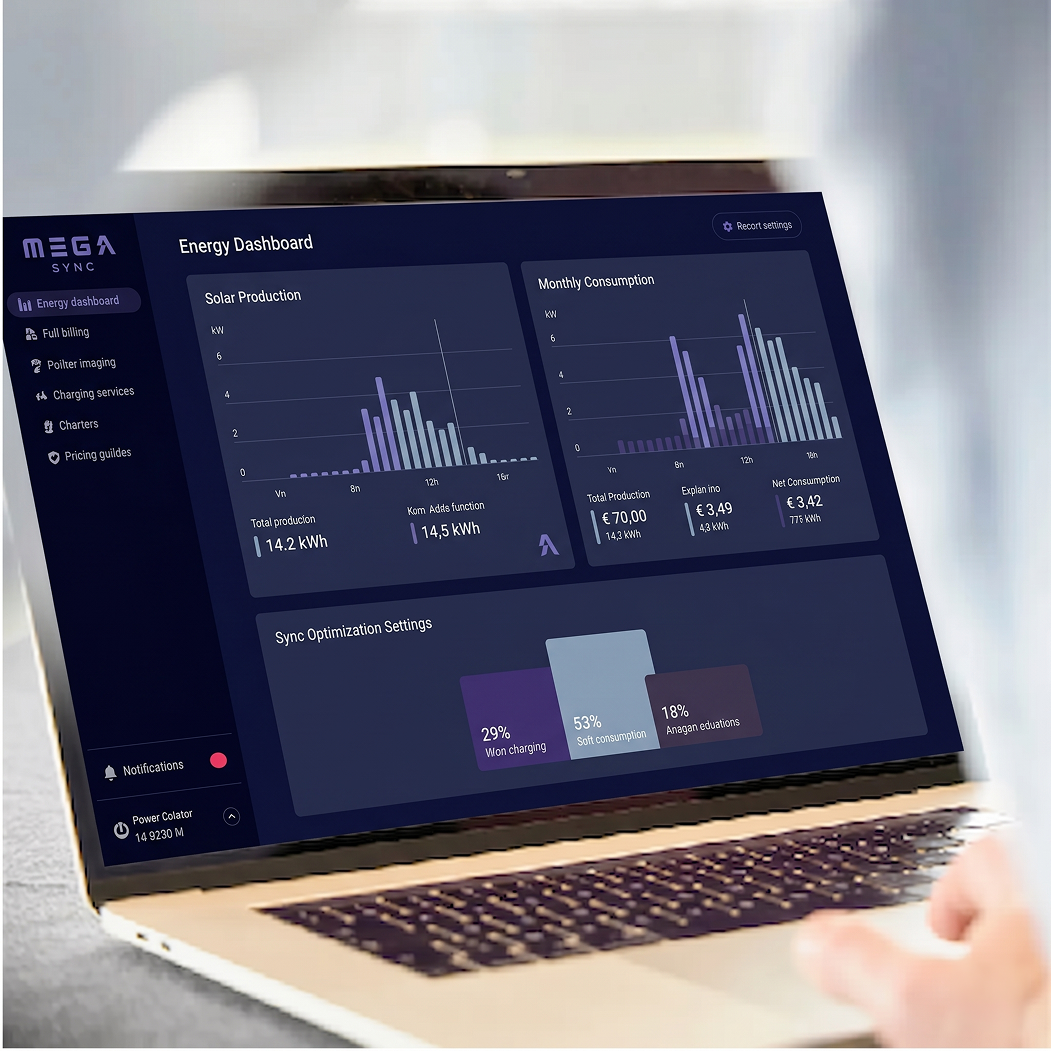
MEGA Sync brings control to your charging operation. Automate priorities, avoid peak stress, and manage charging based on planning and capacity - so that readiness becomes predictable.
.svg)
MEGA Sync is the control layer that transforms chaos into certainty.
MEGA Sync is the software layer within the MEGA ecosystem. It connects planning and grid limits with your charging infrastructure, ensuring charging is no longer ad-hoc, but controlled and predictable.
.svg)
Why charging without guidance goes wrong (even with good chargers)
- Priorities are implicit → trucks not ready on time
- Connection is the bottleneck → peaks and limitations
- Manual interventions → daily charging stress
- No visibility into exceptions → problems only become apparent when it's too late

What you get with MEGA Sync
Automatic charging control that makes readiness predictable — with control over capacity, priorities, and exceptions.
Trucks ready according to departure times and priority.
Maximum output within your grid limits, without peak stress.
Rules and priorities automatically adjust.
Alerts and insights before issues have an impact.
What can it do for you?
charging according to departure and priority rules
Distributing power within your grid connection
Interrupted sessions and anomalies made visible
Driving efficiency within operational constraints
This is how we implement charging control that works
Rapid deployment, fast impact: we configure rules and dashboards based on your operations, and fine-tune for real-world exceptions.
01
.svg)
Readiness, priorities, and constraints clearly defined.
02
Connect planning/vehicles/loaders where necessary.
03
Who loads when, with what targets?
04
Overview, alerts, and daily control.
05
Monitor exceptions, adjust rules.
06
Expand to more trucks/sites with the same logic.
.svg)
Result: less stress, more certainty
.svg)
More trucks ready on time
Fewer ad-hoc interventions
Reduced peak stress (connection under control)
Scalable model without additional operational burden
Proven at charging locations where planning and uptime matter
View case studies where clients increase readiness, reduce peak stress, and gradually become scalable
without additional operational burden.
How Transport VCDB aligns charging capacity with daily operations
Charging tailored to daily operations, with room to grow.
How Group GTS gets its electric trucks ready to depart every morning
Overnight charging for e-trucks without impacting daily operations.
How Multiobus aligns charging infrastructure with passenger transport
Reliable charging for vehicles with fixed routes and schedules.
Navigating the transition together
Good preparation is half the battle. Below you'll find answers to the most important questions we hear daily from transporters making the switch to emission-free driving.
Why do I need MEGA Sync if my charging stations are already working?
.svg)
Charging stations charge vehicles. MEGA Sync ensures that available energy, vehicles, and charging infrastructure work together optimally, making your operation run more efficiently.
How does MEGA Sync help manage energy costs?
By intelligently managing available capacity and directing charging sessions where needed. This helps you avoid unnecessary peaks and get more out of your existing infrastructure.
Kan MEGA Sync voorkomen dat voertuigen onvoldoende geladen zijn?
MEGA Sync helps align charging priorities with operational planning, ensuring vehicles are available when needed.
Do I need to replace existing systems to use MEGA Sync?
Not necessarily. During the analysis, we examine which systems are currently in place and how they can be integrated.
.svg)
.svg)
.svg)
.svg)
1800 Vilvoorde
VAT: BE0787.318.613


